
When the Cameras Stepped into the Rubble
In postwar Rome, cinema had to find a new address. Cinecittà, the vast studio complex built under Mussolini, was no longer a functioning dream factory. It had been damaged, occupied, and transformed into a refugee camp. Film production was pushed outward, into streets scarred by bombing, apartment blocks crowded by displaced families, and neighborhoods where unemployment and hunger were not dramatic devices but daily facts. The camera entered this landscape because the old spaces of illusion were unavailable, and because the world outside had become impossible to ignore.
Italian Neorealism emerged from that collision between material necessity and moral urgency. It rejected the polished fantasies associated with fascist-era cinema, including the bourgeois melodramas known as the cinema dei telefoni bianchi, whose elegant interiors and privileged characters offered escape from political repression and social inequality. Films by Roberto Rossellini, Vittorio De Sica, and Luchino Visconti did more than replace studios with streets. They questioned who deserved to be seen, what counted as a cinematic subject, and whether art could remain ethically comfortable after war. The movement was not merely a style. It was an imperative to witness truth before truth was once again covered by spectacle.
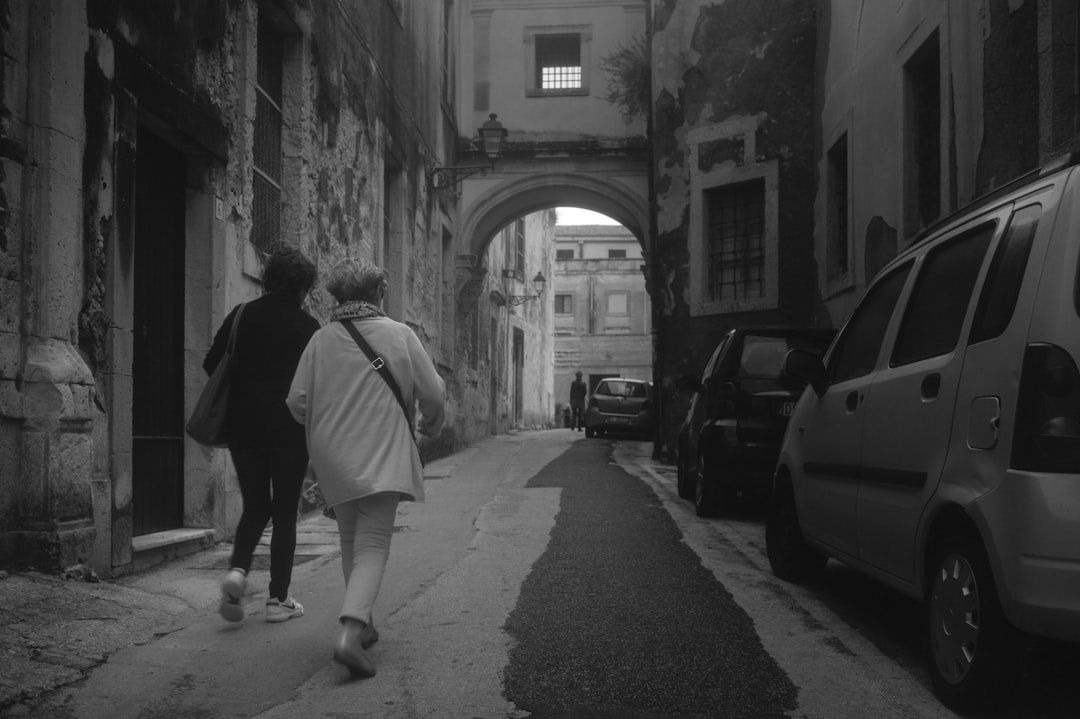
Shattering the Illusion of the White Telephone Era
The white telephone was a small but revealing emblem of Italian cinematic escapism. In the films produced during Mussolini”s rule, it often appeared in luxurious rooms populated by fashionable couples, anxious wives, and polished men whose problems were emotional rather than economic. These productions borrowed the visual language of Hollywood glamour while avoiding the political realities surrounding them. Their apartments were spacious, their clothes immaculate, and their conflicts safely contained within private rooms. The ordinary Italian worker, the displaced family, and the occupied street remained outside the frame.
After 1945, that separation became culturally untenable. Italy was confronting military defeat, fascist collaboration, destroyed infrastructure, food shortages, and profound political uncertainty. Studio-bound sophistication began to look less like entertainment than denial. As the British Film Institute”s history of neorealism explains, the movement”s commitment to real locations, non-professional performers, and de-dramatised narratives formed part of a broader reaction against glossy productions sanctioned by the former regime. Neorealism did not pretend that realism had never existed before, but it radically altered the ethical relationship between the camera and the world it recorded.
The contrast can be understood through the basic grammar of each tradition.
| Fascist-era escapist cinema | Emergent Italian Neorealism |
|---|---|
| Studio interiors and controlled environments | Streets, homes, factories, and damaged neighborhoods |
| Professional stars and idealized appearances | Non-professional actors and visibly ordinary bodies |
| Polished lighting and carefully managed décor | Natural light, available spaces, and physical contingency |
| Romantic or bourgeois private dilemmas | Unemployment, poverty, displacement, and institutional neglect |
| Closed narratives with reassuring resolution | Open-ended, de-dramatised stories shaped by social forces |
The technical shift was equally significant. Filmmakers worked with limited resources, improvised locations, and production conditions that could not guarantee the visual control of a major studio. Raw film stock, natural lighting, location recording, and mobile camera work gave images a new texture. Yet this apparent roughness should not be mistaken for incompetence. Neorealist films were carefully constructed, often requiring elaborate crowd coordination, precise blocking, and inventive solutions to practical problems. Their achievement was not the disappearance of form, but the creation of a form that allowed accident, interruption, and social space to remain visible.
Working Faces and Broken Pavement
Neorealism”s most visible rebellion was its treatment of the human face. Established star systems depended on recognizability, glamour, and the promise that performers could carry viewers into a world more beautiful than their own. Neorealist directors often chose the opposite path. They sought faces marked by labor, uncertainty, age, and fatigue. The bodies on screen did not appear to have been designed for the camera. They seemed to have arrived from the same streets as the audience.
Vittorio De Sica”s Bicycle Thieves makes this principle devastatingly concrete. Antonio Ricci, an unemployed man who finally secures work putting up posters, must possess a bicycle to keep the job. After his wife pawns the family”s dowry linens to recover the vehicle, it is stolen on Antonio”s first day. His search with his young son Bruno becomes a journey through markets, churches, pawnshops, crowds, and police offices, but the missing bicycle is only the visible object of the crisis. What Antonio risks losing is dignity, authority, and the ability to appear responsible in his child”s eyes. As documented by Turner Classic Movies, De Sica used factory worker Lamberto Maggiorani as Antonio and built the film around non-professional performers whose physical presence deepened its social reality.
The film”s realism was also the product of rigorous design. De Sica organized large crowds, created rain with fire hoses, used six cameras to capture the bicycle theft, and employed fluid tracking shots that move with the characters rather than placing them inside an ornamental tableau. The street is never merely scenery. It behaves like an active, oppressive character, offering Antonio countless possible routes while denying him a meaningful escape. Crowds absorb evidence, institutions delay justice, and poverty turns ordinary people into competitors. Rome becomes a social machine that presses against every private emotion.
- Reality should be observed through ordinary lives rather than imposed through heroic plots.
- Location should shape action, not simply decorate it.
- Non-professional performers can bring histories, gestures, and physical truths that polished technique may conceal.
- Social conditions should remain visible inside individual choices.
- Ambiguity and unresolved pain can be more truthful than manufactured closure.
- The camera should listen to environments, crowds, and marginal voices as carefully as it watches protagonists.
The Evolution from Survival to Modern Existential Angst
Neorealism did not vanish because its questions were answered. It changed because Italy changed. By the late 1950s and early 1960s, economic growth was transforming cities, consumer habits, domestic life, and social expectations. The country was moving away from the immediate material ruin represented in films such as Bicycle Thieves and Umberto D., but prosperity did not eliminate alienation. It produced new forms of anxiety, including loneliness amid crowds, emotional disconnection, sexual constraint, and uncertainty about what modern life was meant to provide.
Directors such as Michelangelo Antonioni and Federico Fellini carried neorealism”s observational grammar into more subjective territory. Antonioni turned streets, offices, industrial landscapes, and modern architecture into psychological environments where characters struggled to connect. Fellini transformed street-level observation into memory, fantasy, performance, and grotesque comedy. Italian cinema moved toward melodrama, social satire, magical realism, and the morally ambiguous worlds of the commedia all”italiana. The camera still watched lived reality, but reality now included interior emptiness, consumer desire, and the unstable identities produced by affluence.
Tracing the DNA of Realism in Modern Global Cinema
The influence of Italian Neorealism can be felt wherever filmmakers reject polished separation between cinema and social life. Its direct legacy runs through the French New Wave, British kitchen-sink drama, Indian parallel cinema, Brazilian Cinema Novo, postwar German filmmaking, African national cinemas, Latin American political film, contemporary docudrama, and independent cinema made far from commercial centers. The movement”s international reach is examined in Italian Neorealism and Global Cinema, a collection that traces adaptations of its methods across countries as different as India, Brazil, Hong Kong, Colombia, France, Belgium, and the United States.
The lineage is not a simple chain of imitation. Each generation translated neorealism according to its own crisis, technology, and political vocabulary.
- Postwar Italian filmmakers move cameras into damaged streets and communities, treating ordinary people as historical subjects.
- André Bazin and other critics articulate the movement”s faith in photographic openness, contingency, and environments that cannot be fully controlled.
- French New Wave directors adopt location shooting, small crews, mobile cameras, and a willingness to let the city interrupt the fiction.
- Filmmakers in India, Brazil, Africa, and Latin America adapt realist techniques to struggles over poverty, colonialism, class, and national identity.
- American independent cinema and docudrama combine non-professional performers, handheld images, and social research with more fragmented narrative forms.
- Contemporary digital creators return to location-based storytelling because inexpensive equipment makes immediacy possible, while political crises demand testimony that feels physically present.
That return matters because realism is never simply a look. It is a decision about attention. A filmmaker who shoots in a real neighborhood accepts the possibility of noise, weather, traffic, and unplanned bodies entering the image. A filmmaker who casts people without conventional screen polish accepts that gestures may be less legible, beauty less standardized, and performance less easily controlled. These choices can expose the structures that studio polish tends to hide.
The movement”s global afterlife also complicates any narrow idea of national cinema. The postwar exchange of scripts, performers, styles, capital, and ideas connected Italian and American industries within a broader transnational system, as discussed in The Celluloid Atlantic. Neorealism”s legacy therefore belongs not only to Italy. It belongs to filmmakers who use cinematic form to question official images of national identity and to make social experience visible from below.
Carrying the Truth of the Street into Contemporary Storytelling
Italian Neorealism”s lasting triumph was not that it made cinema look poor. It was that it exposed the poverty of manufactured illusion when measured against human suffering. By replacing protected interiors with streets, stars with working faces, and tidy plots with social uncertainty, the movement restored consequence to the image. Its films insist that a bicycle, a room, a job, or a child”s frightened glance can carry the weight of an entire political order.
That insistence remains urgent for contemporary cinema. Digital tools can produce images of extraordinary smoothness, but frictionless artificiality can also distance viewers from the lives being represented. The enduring challenge is to make images that listen: to marginalized voices, unglamorous bodies, unstable neighborhoods, and histories that institutions prefer to simplify. For filmmakers, the lesson is not to imitate postwar Rome mechanically. It is to ask what realities demand attention now, then build a form honest enough to let those realities resist easy resolution.