
When the Rain-Slicked Pavements Reflect Broken Systems
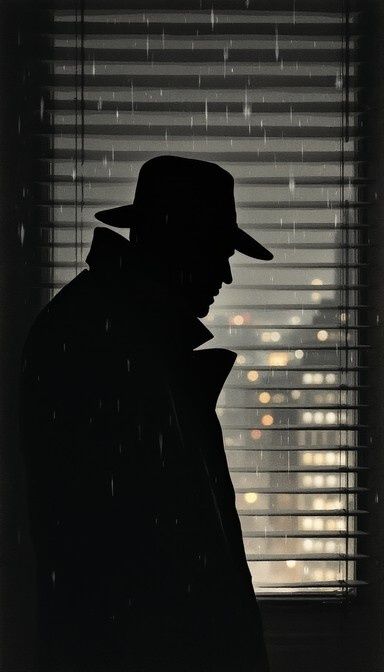
Neo-noir is often reduced to a wardrobe and a weather report: a fedora under a streetlamp, venetian-blind shadows across a suspect”s face, cigarette smoke curling toward a ceiling fan, rain turning asphalt into black glass. Those images matter, but they are symptoms rather than the disease. Noir”s real subject is the collapse of trust. Its detectives, drifters, compromised professionals, and doomed witnesses move through worlds where institutions promise order while quietly manufacturing confusion, violence, and impunity.
That is why the mode keeps returning whenever public confidence fractures. War, political scandal, technological upheaval, corporate power, climate paralysis, and social isolation all create the conditions in which noir becomes newly legible. The genre functions as a cultural seismograph, registering tremors before official language can contain them. When the civic contract feels fraudulent, audiences recognize the appeal of stories that refuse reassuring answers, expose hidden arrangements, and admit that moral clarity may be the first casualty of systemic crisis.
Postwar Ghosts and the Birth of a Disillusioned Lens
Classic American film noir emerged in the shadow of the Second World War, although its roots reached into hard-boiled fiction, German Expressionism, crime melodrama, and the anxieties of Depression-era urban life. Returning veterans faced disrupted identities and uncertain social roles. The atomic bomb transformed technological progress into a source of existential dread. Women who had entered workplaces during wartime encountered pressure to retreat into domestic roles, while men returned to a society that had changed in their absence. Noir converted these tensions into stories of unstable homes, dangerous desire, corrupt employment, and protagonists who could no longer assume that respectable life was safe.
Its visual language made private unease visible. Low-key lighting divided faces and rooms into zones of concealment, while deep focus, wide-angle lenses, tilted compositions, and abrupt perspective shifts made familiar spaces appear hostile. These techniques were not exclusive to crime films, but noir intensified them until style became a form of psychological evidence. As research on cinematography and noir”s technological evolution shows, faster film stocks and changing production practices helped filmmakers push Hollywood”s existing visual conventions toward sharper contrast and expressive instability. A useful academic entry point is the Film Studies visual studies curriculum, which reflects how lighting, lenses, composition, and screen space can shape meaning beyond plot.
The contrast with classical Hollywood optimism was stark. Earlier narratives often suggested that individual courage, institutional competence, or romantic commitment could restore balance. Noir placed those promises under suspicion. The detective might uncover the truth, but truth did not guarantee justice. The innocent might survive, but survival could feel like another form of defeat. Critical work such as Noir Anxiety also emphasizes that the genre”s unease involved race, sexuality, national identity, and gender, not only postwar trauma or atomic fear. Noir”s darkness therefore covered more than a city at night. It concealed social contradictions that conventional narratives preferred to resolve.
- The damaged protagonist replaced the confident hero with a compromised observer.
- The city became a maze of contracts, temptations, surveillance, and unequal power.
- The femme fatale expressed cultural fears about sexuality and autonomy, even when the trope reduced complex women to male anxiety.
- The investigation promised knowledge without guaranteeing meaningful repair.
The 1970s Paranoia Wave and the Anatomy of Institutional Rot
The next major revival arrived when the institutions of postwar America became difficult to believe. The Vietnam War exposed the distance between official rhetoric and lived reality. Watergate demonstrated that political power could be used to obstruct truth rather than protect it. Economic uncertainty, urban decline, and widening civic alienation weakened the assumption that authority was fundamentally legitimate. The New Hollywood era responded with films in which corruption was not an aberration inside the system. Corruption was the system”s operating condition.
Chinatown turns a private investigation into an encounter with power so entrenched that evidence itself seems inadequate. Its conspiracy is not merely a puzzle to solve, but a structure linking money, land, politics, family violence, and public resources. The Long Goodbye revises the hard-boiled detective through a protagonist whose old codes no longer fit a morally flexible California. Philip Marlowe”s loyalty appears almost anachronistic beside a culture of self-invention, wellness language, celebrity wealth, and casual betrayal. In both films, the investigator”s competence cannot restore a vanished moral order.
This period also reshaped how popular culture understood genre. The Popular Culture Association Virtual Exhibit offers a useful reminder that media analysis has long examined how counterculture, genre, and institutional criticism interact. The 1970s noir wave was not simply darker entertainment. It was a public argument about whether official explanations deserved belief, and whether the individual could remain ethically intact while navigating structures designed to absorb dissent.
| Classic noir convention | 1970s neo-noir revision |
|---|---|
| The corrupt individual | The institution is corrupt beyond one villain |
| The private detective seeks hidden truth | The investigation reveals truths too entrenched to repair |
| The city is a shadowy labyrinth | Suburban growth, corporate development, and bureaucracy conceal power |
| The protagonist follows a personal code | The code appears noble, obsolete, or dangerously isolated |
| The ending restores limited order | The ending confirms that order was compromised from the beginning |
Techno-Capitalism and the Alienation of the Modern Algorithm
Contemporary noir often removes the smoky office without removing the isolation. The detective may now sit beneath fluorescent lights in a corporate corridor, work from a home filled with screens, or navigate databases whose conclusions cannot be challenged by ordinary citizens. Surveillance cameras, recommendation systems, biometric access, data brokers, and anonymous platforms replace the old constellation of informants and locked filing cabinets. The atmosphere is cleaner, but the moral air is thinner.
Mid-2020s anxiety is shaped by systems that are both intimate and opaque. Algorithms influence what people see, buy, fear, and believe, yet responsibility is dispersed across executives, engineers, shareholders, regulators, and users. Climate inaction intensifies the same sense of paralysis. The evidence of danger is widely available, but political and commercial incentives delay meaningful response. Reporting on climate cinema has connected films such as First Reformed and Don”t Look Up to the emotional problem of recognizing catastrophe while institutions convert urgency into spectacle, denial, or managed messaging. Contemporary noir thrives in that gap between knowledge and action.
Political personas can also appropriate noir”s language. Analysis of Donald Trump through hard-boiled conventions argues that the image of the outsider battling a corrupt establishment can express genuine public estrangement while being redirected toward personal power and political expediency. That tension is central to modern noir. The apparent rebel may expose institutional failure, yet exploit the same distrust for self-interest. The genre”s question is not simply who stands outside the system. It asks who benefits when everyone believes the system is irredeemable.
- Distributed surveillance replaces the single watcher with networks that track behavior continuously.
- Algorithmic uncertainty makes motive and accountability difficult to locate.
- Corporate spaces appear polished, open, and efficient while concealing coercive hierarchies.
- Climate dread expands noir”s fatalism from one damaged city to an endangered planetary system.
- Information overload turns the search for truth into a struggle against manipulation, exhaustion, and competing realities.
The Transnational Shift Toward Relentless Exposure
Neo-noir no longer requires American streets or literal darkness. In Erik Skjoldbjærg”s Insomnia, the perpetual daylight of northern Norway makes exposure more oppressive than concealment. The detective cannot retreat into night, and the landscape offers no comforting shadow in which guilt can disappear. When confusion leads Jonas Engström to shoot his partner, the film turns visual disorientation into moral blindness. Light does not purify the world. It removes excuses.
This transnational movement changes the genre”s political vocabulary. Scandinavian noir often presents social order as rational, humane, and administratively competent, then reveals the violence or compromise buried within that appearance. International works such as Ali Abbasi”s Holy Spider extend noir toward patriarchal violence, surveillance, and communal complicity. The villain is not always a solitary monster separated from society. Sometimes the more disturbing conclusion is that a community knows enough to intervene and chooses not to, or that institutions translate suffering into procedure rather than accountability. Noir”s moral burden therefore becomes collective. Everyone occupies the frame, and no one stands entirely outside responsibility.
Navigating the Dark Mirrors of Our Collective Unease
Neo-noir endures because it gives visual form to exhausted public faith. Its shadows, screens, empty highways, corporate interiors, and bleached landscapes reflect societies that can no longer accept official innocence at face value. The genre does not merely announce that individuals are flawed. It asks whether the structures surrounding them have been designed to conceal damage, distribute blame, and make repair appear impossible.
Audiences return to these stories because clean resolutions can feel dishonest when real crises remain unresolved. A noir ending rarely offers comfort, but it can offer recognition: the sense that fear, suspicion, and moral confusion are not private failures but responses to conditions larger than the self. Watching cinematic cynicism closely does not require surrendering to despair. It can sharpen attention to the systems that produce despair, reveal the costs of convenient explanations, and make uncomfortable realities harder to dismiss. In that sense, the darkest films may serve a civic purpose. They hold the mirror steady until the broken reflection becomes impossible to ignore.