
The Vanishing Physical Record of Human Vision
A motion picture can appear weightless on a screen, yet the image itself is anything but immaterial. Every flicker depends on a physical carrier: a strip of plastic coated with gelatin and photographic chemicals, a magnetic element, a hard drive, or a carefully managed stream of data. These objects age, deform, corrode, burn, and become unreadable. Cinema is not an immortal sequence of ideas waiting in the cultural ether. It is a material record whose survival depends on chemistry, engineering, money, and deliberate human care.
That reality sits uneasily beside modern viewing habits. A film selected on a streaming menu seems instantly available, endlessly reproducible, and detached from any visible support. Early film stocks offered no such security. Silent-era nitrate reels and the acetate materials that followed could shrink, become brittle, release destructive gases, or lose their images entirely. To preserve cinema is therefore not simply to admire its past. It is to rescue vulnerable evidence of how people once saw, imagined, performed, argued, and remembered the world.
Nitrate Combustion and the Inevitable Chemistry of Vinegar Syndrome
Cellulose nitrate, used extensively from the 1890s through the early 1950s, is one of the most dangerous supports in film history. Its instability is built into its chemistry. As nitrate decomposes, it produces acidic nitrogen oxides. Those products accelerate further breakdown, creating an autocatalytic process in which deterioration feeds itself. Heat, humidity, poor ventilation, sealed containers, and densely packed reels can intensify the reaction. At advanced stages, the film may yellow, buckle, soften, stick together, become brittle, and ultimately disintegrate. Nitrate can also burn fiercely, producing toxic and oxidizing gases, which is why specialized vaults, separation from other film stocks, ventilation, fire protection, and expert handling remain essential.
Cellulose acetate was introduced as a safer alternative, but “safety film” did not mean permanent film. Acetate can undergo deacetylation, a chemical reaction that releases acetic acid. The characteristic pungent smell has given this condition its familiar name, vinegar syndrome. As acidity rises, the film may shrink, warp, embrittle, and lose dimensional stability. Warm, humid storage accelerates the process, while cold storage can slow it. Once affected, material should generally be isolated, assessed, and considered for reformatting before neighboring reels are contaminated by the same deteriorating environment.
Polyester became the more durable modern support because of its strength and dimensional stability, but it did not erase the older crisis. Vast collections still contain nitrate and acetate originals, and manufacture dates alone cannot reliably identify a film base. Archivists must examine markings, physical behavior, translucency, polarization patterns, and other evidence. The Film-Based Negatives and Positives guidance from the U.S. National Archives emphasizes the need to distinguish among polyester, acetate, and nitrate before deciding how material should be housed, handled, or copied.
- Nitrate deterioration: yellowing, brittleness, sticky or softened gelatin, bubbling, staining, shrinkage, and image oxidation.
- Acetate deterioration: vinegar odor, channeling, severe shrinkage, warping, embrittlement, and loss of dimensional stability.
- Polyester concerns: the base is comparatively stable, but emulsion damage, poor enclosures, dust, humidity, color fading, and careless handling can still destroy the recorded image.
These symptoms are not merely technical inconveniences. A shrunken reel may no longer pass safely through a projector or scanner. A sticky emulsion can fuse layers together. A nitrate element can become a fire hazard while still containing the only surviving version of a film. Preservation begins with inspection, correct identification, clean handling, appropriate enclosures, and storage conditions designed to slow reactions before emergency copying becomes the only option.
Fortresses of Cold and Darkness in Deep Archive Facilities
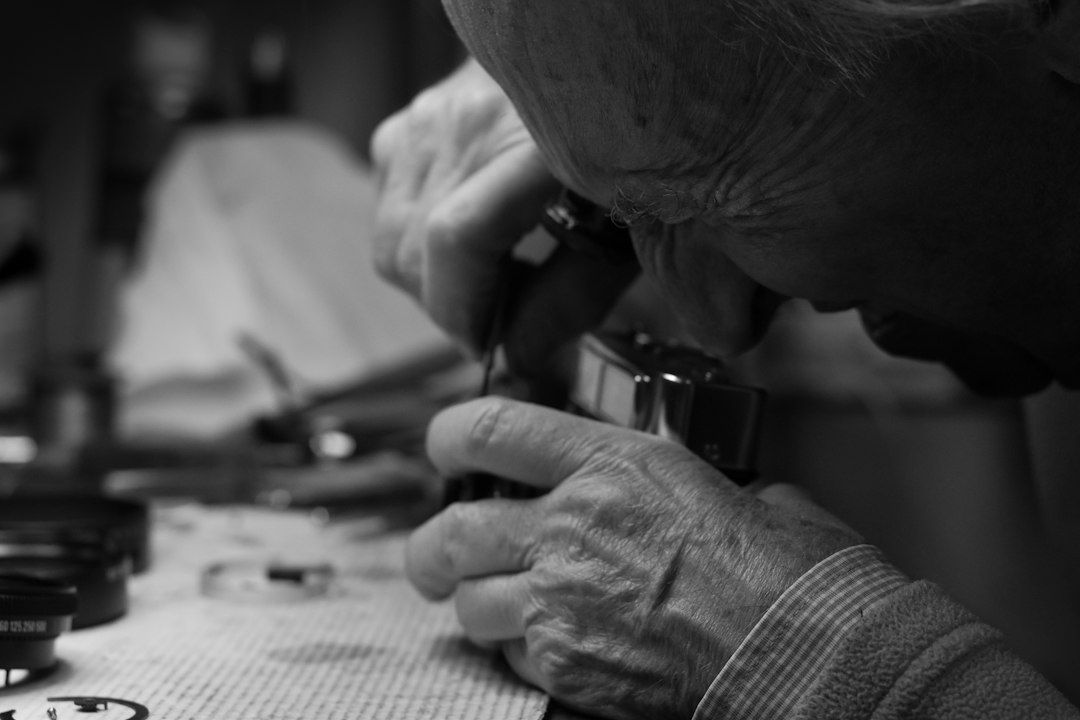
Cold storage is a form of time management. Lower temperatures slow the chemical reactions responsible for many forms of film deterioration, allowing an archive to extend the useful life of a vulnerable object. Darkness matters as well, particularly for photographic materials whose dyes and emulsions can be damaged by light. The result is an environment that resembles a fortress rather than a conventional library: insulated, compartmentalized, monitored, and designed around the needs of materials that may remain inaccessible for long periods.
The Library of Congress Packard Campus in Culpeper, Virginia, illustrates the scale of this undertaking. The National Audio-Visual Conservation Center occupies a 415,000-square-foot facility with extensive collections of film, television, radio, news footage, and sound recordings. Its storage vault includes more than 144,000 nitrate reels in 124 climate-controlled pods designed to reduce the risk of nitrate fires. The campus, which began operating as a media-preservation facility in 2007 after the renovation and donation of a former Federal Reserve facility, demonstrates that preservation is inseparable from architecture, energy systems, fire engineering, logistics, and trained staff.
Retrieving an item from a cold vault is not as simple as opening a freezer door. A sudden transition from cold, dry conditions into warm, humid air can create condensation on the film and its container. Moisture can damage emulsions, encourage mold, and complicate handling. Archives therefore use a controlled acclimatization process.
- Seal the material before movement. Film and photographs are placed in suitable bags or containers, often using nitrile gloves and carts, so warmer air cannot immediately reach the cold surface.
- Move the sealed item to a controlled holding area. Where an acclimatization room exists, the material warms there before entering ordinary working conditions.
- Allow sufficient time. Small quantities may require about an hour, while larger groups can need four hours or overnight. Material from freezers or poorly controlled vaults may remain sealed for eight hours or overnight.
- Inspect before opening and refiling. Packaging is checked for damage, condensation, frost, or other hazards. Offsite transport can require several days, and sometimes a week, before the material is ready to return to cold storage.
Bagging also serves as protection against emergencies such as power loss, climate-control failure, frost, or accidental water release. The system may seem cautious to the point of ritual, but the caution reflects the physical reality of archival materials. A reel can survive decades in stable cold storage and then suffer harm during an ill-managed retrieval. Preservation is therefore not only a matter of where an object rests, but also how every transition is controlled.
Comparing Preservation Realities Between Silver Halide and Silicon
Photochemical film and digital storage fail in different ways, producing a complicated paradox. A well-made, properly stored film element can remain legible for many decades and, under favorable conditions, far longer. Its information is visible through magnification and can sometimes be recovered with relatively simple optical methods. Digital files, by contrast, can be copied without generational image loss, but they depend on layers of hardware, software, file systems, power, documentation, and institutional attention.
An 8K scan is not a preservation endpoint. It is a high-resolution representation created through a chain of decisions about the scanner, lighting, stabilization, color management, sound, metadata, compression, and restoration. The resulting file must be checked, stored in more than one location, monitored for corruption, and migrated when storage systems or file formats become obsolete. The original film still matters because it may contain information that a scan missed, and because future technologies may extract detail or color more effectively than current tools. Digital preservation principles and technical guidance are collected through professional networks such as the FIAF Technical Commission and the broader film preservation guide resources used by practitioners.
| Preservation factor | Photochemical film | Digital files |
|---|---|---|
| Typical vulnerability | Chemical decay, shrinkage, mold, fading, fire, and physical damage | Media failure, corruption, obsolete hardware, software incompatibility, and loss of metadata |
| Reading method | Optical inspection, projection, or scanning | Specialized hardware and software are required to decode the file |
| Migration pattern | Copying may be needed when the original is unstable or inaccessible | Regular integrity checks, replication, and migration are necessary as systems change |
| Energy demand | Cold storage requires substantial environmental control | Active storage, backups, cooling, networking, and data management require continuous energy |
| Failure character | Often gradual and visible, although fire or mishandling can be sudden | May be silent until a file, drive, database, or decoding pathway fails |
The comparison resists easy technological optimism. Film is not automatically safe because it is old, and digital storage is not automatically permanent because it is new. Film deterioration can sometimes be detected through inspection and slowed through isolation and cold storage. Digital loss can remain invisible until several copies share the same corrupted metadata, inadequate documentation, or obsolete infrastructure. A credible preservation program must therefore balance the cost of maintaining original photochemical objects against the recurring cost of digital migration, following documented principles for trustworthy repositories, fixity, access, and disaster recovery.
The Global Race Against Time for Endangered Cinema Heritage
No archive can preserve the world”s moving-image heritage alone. The International Federation of Film Archives, or FIAF, has promoted film collection, preservation, access, cooperation, and research since its foundation in 1938. Its framework connects institutions through shared ethical commitments and technical exchange, while its commissions develop guidance on cataloguing, photochemical storage, scanning, restoration, digital preservation, and collection management. The CCAAA resource network similarly brings together organizations and standards associated with audiovisual, photographic, sound, and digital archives, including UNESCO, ICCROM, SMPTE, IASA, and others.
Cooperation, however, does not eliminate inequality. Archives in the Global South, community collections, independent cinemas, experimental film movements, and politically marginalized traditions may lack cold vaults, stable electricity, conservation staff, or the equipment needed for high-quality scanning. A film can be culturally indispensable while having little commercial value, leaving it vulnerable to neglect. When money and time are limited, archivists face painful triage decisions.
- Which titles have surviving original negatives, and which exist only as damaged prints?
- Which materials are in the most advanced chemical danger?
- Which works represent communities or movements otherwise absent from the historical record?
- Which elements can be safely scanned, repaired, or duplicated with available equipment?
- How can rights, consent, access, and cultural ownership be respected during preservation?
Triage is never a neutral technical exercise. It determines whose images remain available for scholarship, public memory, and future creative work. A narrowly commercial definition of importance can preserve familiar studio titles while allowing local, activist, Indigenous, queer, experimental, or non-commercial histories to disappear. International standards are valuable precisely because they can support shared practice, but equitable preservation also requires funding, training, regional infrastructure, and partnerships that do not treat local archives as passive recipients.
Safeguarding the Material Memory of the Moving Image
Moving-image history is an endangered material artifact, not an immortal cultural given. The film that survives in a vault is still negotiating with chemistry. Nitrate can accelerate toward combustion and disintegration. Acetate can exhale the evidence of its own collapse. Polyester can protect the image while dust, humidity, dyes, soundtracks, or mishandling threaten other layers of the record. Digital files can widen access dramatically, yet they require continuous stewardship rather than a single triumphant scan.
The durable strategy is therefore dual-track. Original film should remain in properly designed, cold, dark, monitored storage whenever it can be safely retained. At the same time, endangered materials should be digitized through carefully documented workflows, with multiple copies, integrity checks, maintained metadata, and planned migration. Public funding must support both sides of this equation, because preservation is not a one-time cultural purchase. It is an ongoing scientific and civic commitment.
When an archive saves a century-old reel, it preserves more than entertainment. It preserves gestures, accents, streetscapes, labor, architecture, political imagination, and the visual grammar through which earlier societies understood themselves. That memory will not survive through nostalgia alone. It requires cold rooms, disciplined procedures, international cooperation, and the willingness to treat every surviving image as a fragile witness whose silence, once irreversible, cannot be edited away.